How to Choose the Right Coating for a Worn Part
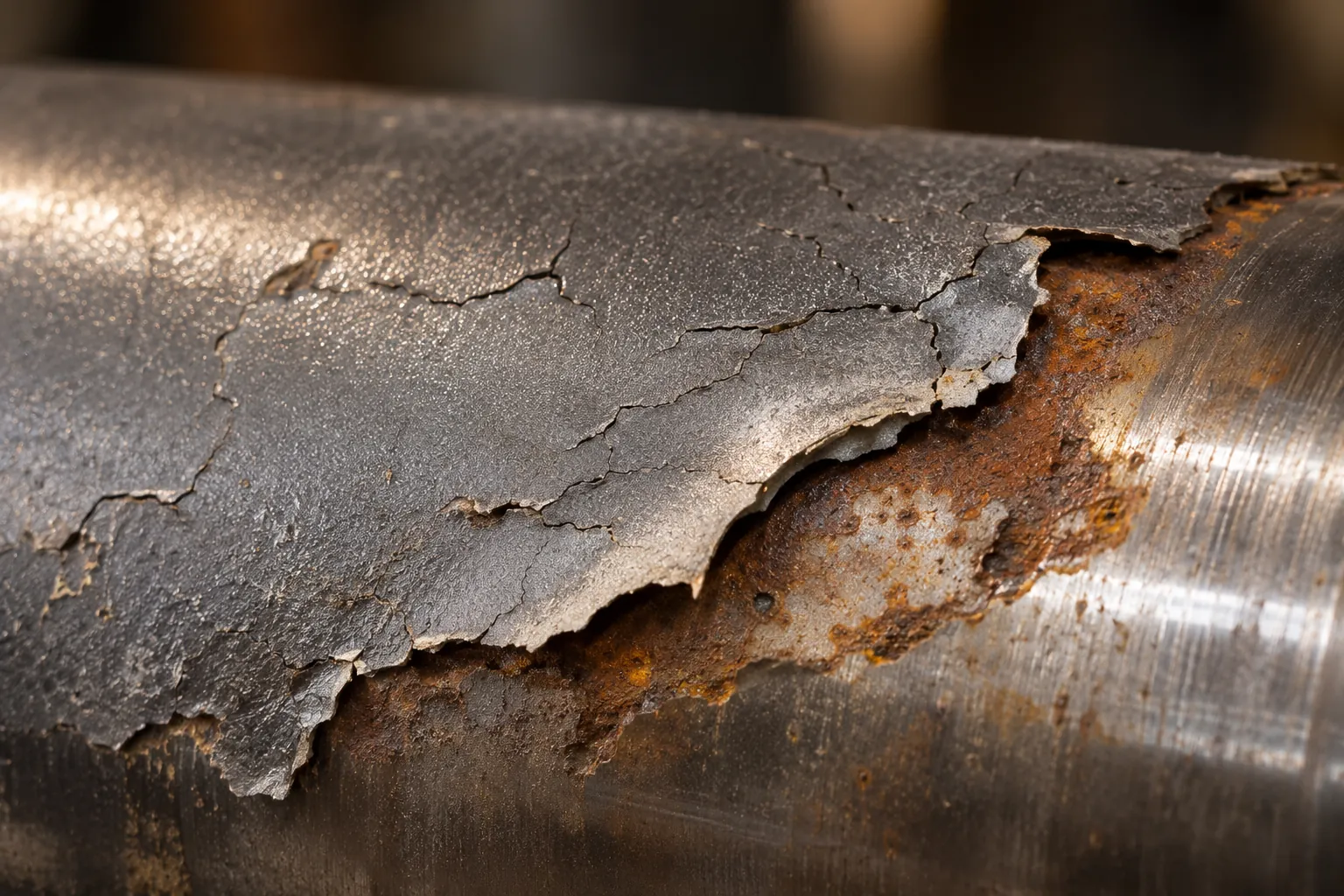
The right coating depends less on the part and more on how it fails. Start by naming the wear mechanism, then match it to a process.
Step 1: Identify the wear
| What you see | Likely cause | What usually works |
|---|---|---|
| Grooves, scratches, polished-thin surfaces | Abrasion | Carbide coatings: HVOF, spray and fuse or PTA hardfacing |
| Wavy, sandblasted look facing a flow | Erosion | HVOF tungsten carbide, PTA for severe cases |
| Pitting, rust, loss of material in fluids | Corrosion | Nickel or cobalt alloy coatings, weld cladding, linings |
| Cracking, scaling, oxidation | Heat | Ceramic coatings, nickel and cobalt alloys |
| Chipping, dents, deformation | Impact | Thick weld overlays such as PTA; avoid brittle ceramics |
| Product build-up on the surface | Sticking | PEEK and polymer coatings |
Step 2: Check the operating conditions
- Temperature: some coatings soften or crack above certain temperatures
- Medium: dry abrasive, slurry, chemical, steam
- Load and impact: steady, cyclic or shock
- Tolerance: does the coated part need to hold tight dimensions?
- Base material: some metals are hard to weld or coat
Step 3: Decide between a coating and an overlay
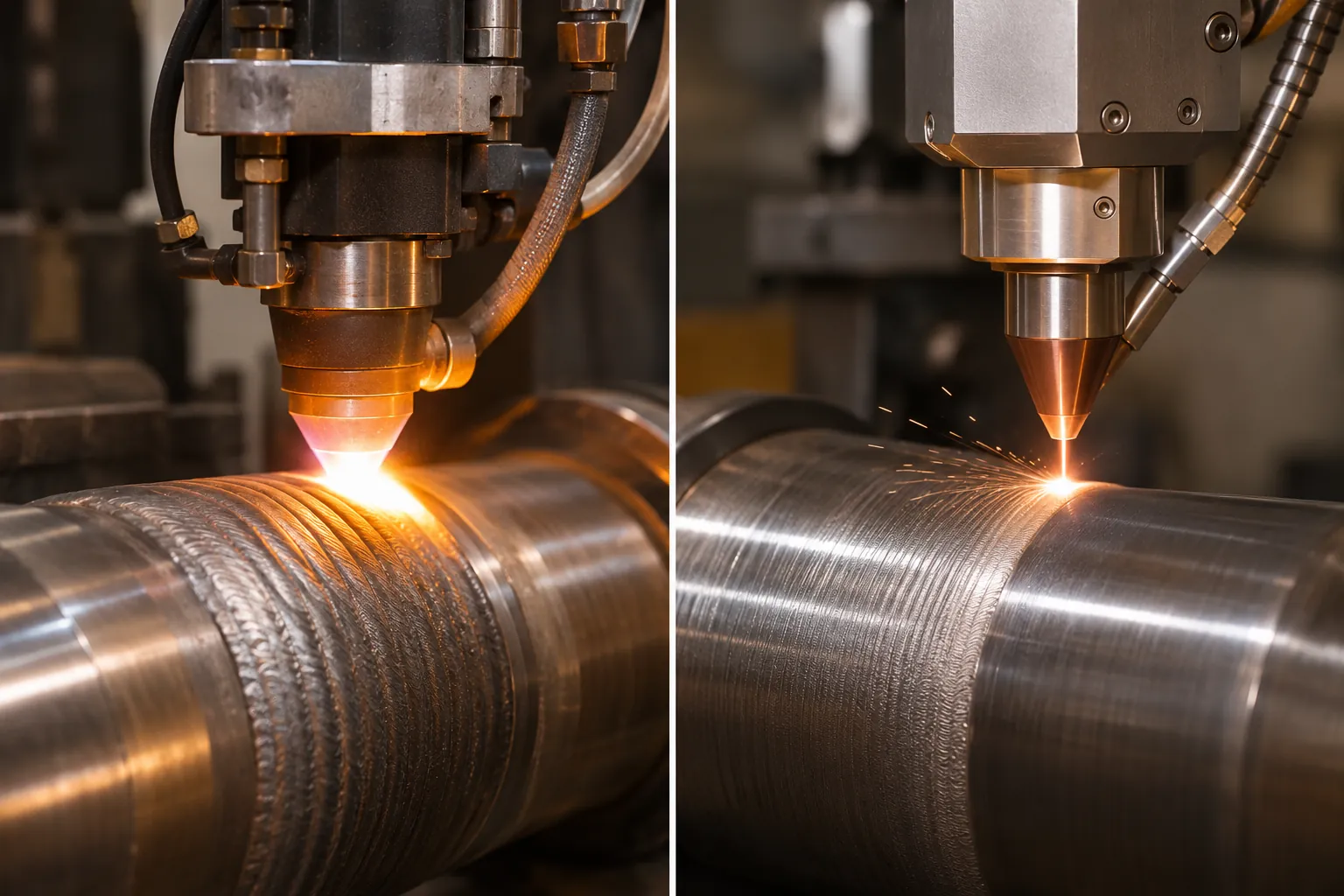
Thermal spray coatings are thin, precise and put little heat into the part. Weld overlays (PTA, laser, MIG and TIG cladding) are thicker and fused to the metal, so they handle heavier wear and impact. Many parts use both: a fused overlay where wear is worst and a sprayed coating elsewhere.
What to send us for a quick recommendation
- A photo of the worn part and, if possible, a new one
- The base material and drawing, if you have it
- Operating temperature and the medium it handles
- How long the part lasts today, and how long you need it to last
Send these details through our enquiry form and our engineers will suggest a coating.