Why Industrial Coatings Fail, and How to Prevent It
A coating that peels, cracks or wears through early is expensive: you pay for the coating, the downtime and the replacement. Most failures come from a handful of causes, and almost all of them can be prevented.
1. Poor surface preparation
Coatings need a clean, roughened surface to grip. Oil, moisture or old coating left on the part, or blasting that is too light, leads to peeling. Good shops degrease, grit blast to a specified profile and coat soon after.
2. The wrong coating for the job
A hard ceramic on a part that takes impact will chip. A thin coating against heavy abrasion will wear through. Matching the coating to the wear mechanism is the single biggest factor in coating life.
3. Too thick, or too thin
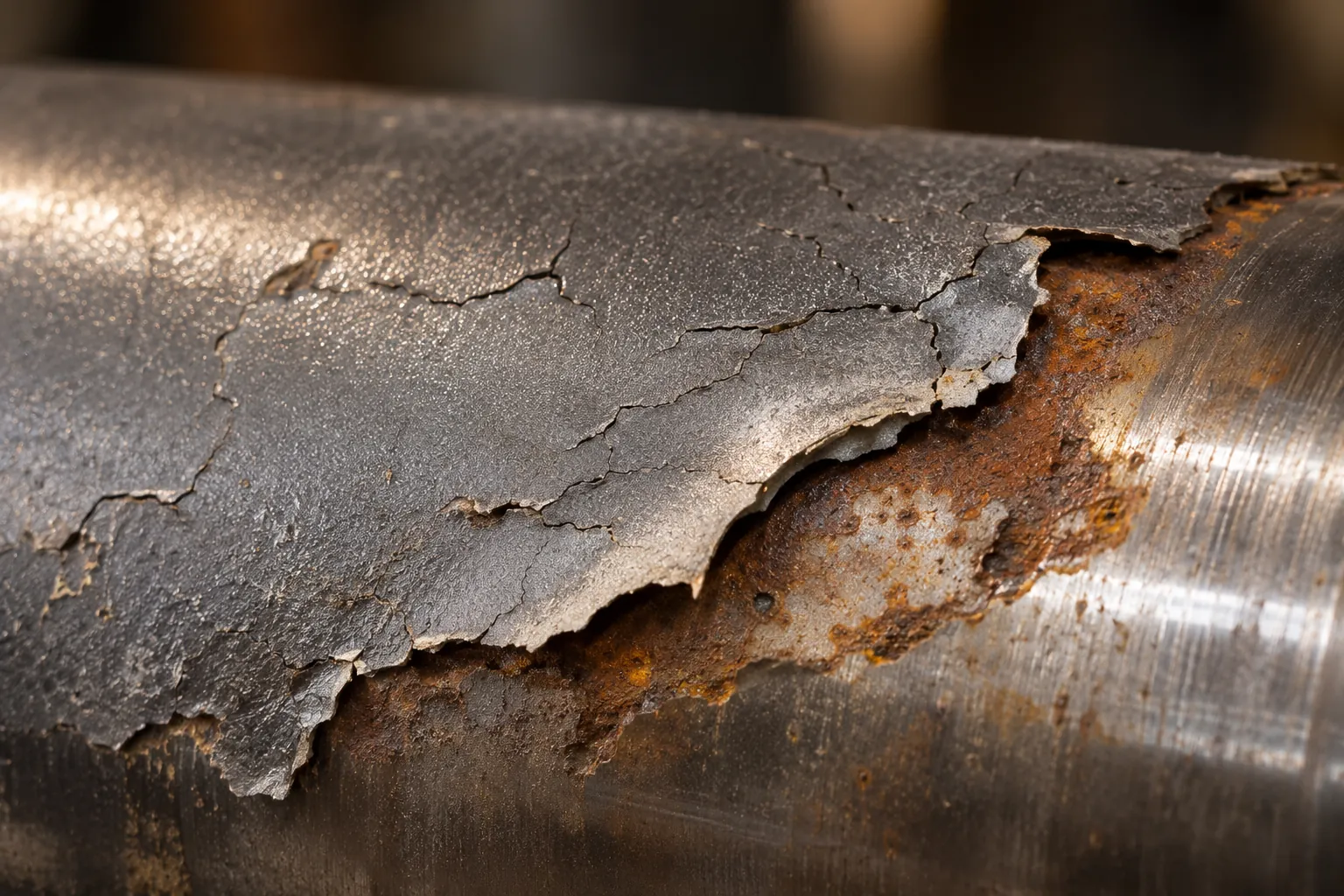
Every coating has a sensible thickness range. Too thick builds stress and can spall off; too thin wears through quickly.
4. Corrosion getting underneath
If a coating has connected porosity, corrosive fluids can reach the base metal and lift the coating from underneath, which shows as blisters and rust. Dense coatings, sealing and the right matrix alloy prevent this.
5. Heat damage when finishing
Aggressive grinding can overheat and crack hard coatings. Coated parts should be ground with suitable wheels, coolant and light passes.
6. Running outside the design conditions
A higher temperature, a new process fluid or more abrasive feed can push a coating beyond what it was chosen for. If conditions change, review the coating.
How to prevent failures
- Share the real operating conditions when you order
- Ask how the surface will be prepared
- Check the coating thickness and finishing method
- Inspect coated parts at each shutdown and record their life
Had a coating fail? Send us photos of the failed part. We can usually tell why it failed and suggest a better option, from HVOF to PTA hardfacing.